TikTok Shop Seller Center
- 4.3
- Rating
- 50.00M
- Installs
- Free
- Price

 Analysis by App-foxy
I approached TikTok Shop Seller Center as a working seller rather than as another shopping app. That distinction matters. This is a free shopping-focused app from TikTok Pte. Ltd., built around the practical job of selling through TikTok from a phone. Its appeal is immediate if your products already fit short-form video: you can think about listings, promotion, and day-to-day selling without sitting at a desktop all the time.
My first impression was that the app makes sense for people who already understand TikTok’s pace. It is not trying to be a traditional online marketplace with a separate social layer added afterward. The selling experience is tied to the attention, presentation, and quick decisions that make TikTok useful for product discovery. That can feel refreshingly direct during the first week, although it also means the app is a poor match for sellers who prefer a quiet catalog, predictable browsing, or a purely administrative workflow.
What the first week feels like for a new seller
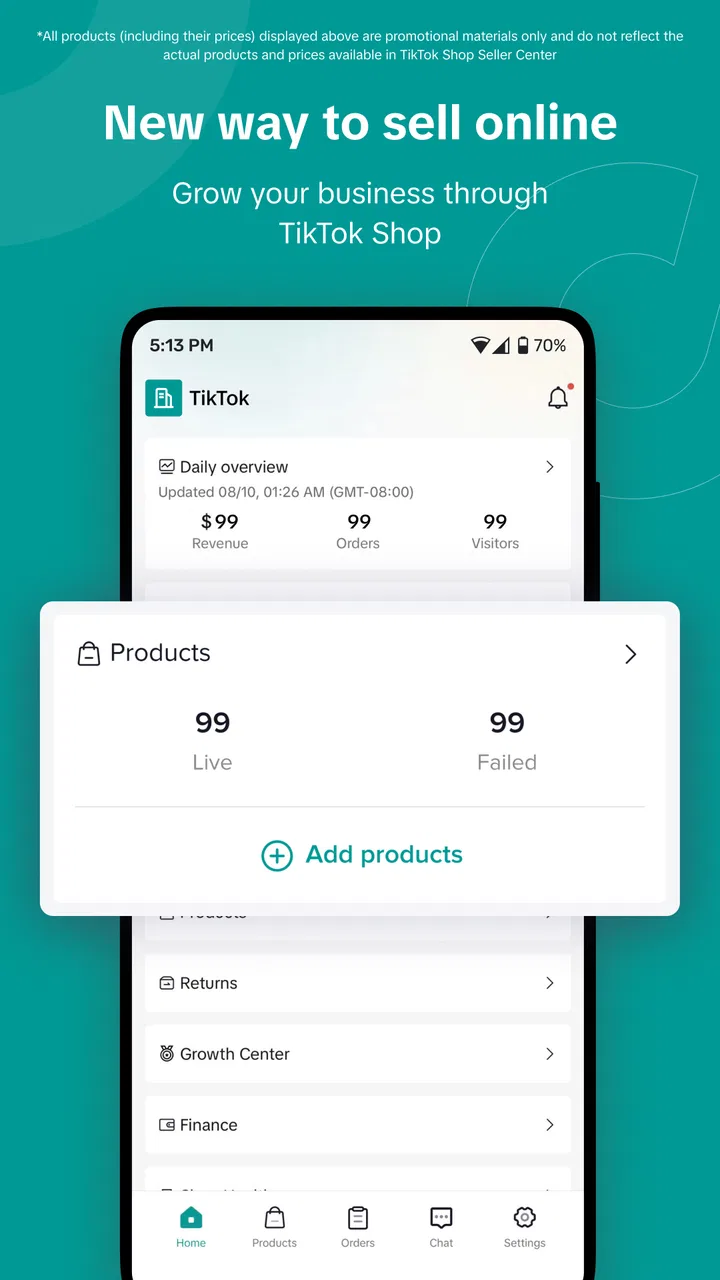
The strongest early benefit is convenience. If I am away from my computer and need to check the state of my shop, review a product, or keep up with activity, a phone-centered workspace feels more practical than waiting until I return to a full browser setup. The store summary, “Sell on TikTok from your phone,” captures the central idea, but the real value is how that idea changes the seller’s routine: shop work can happen in short sessions instead of one long desk-bound block.
You May Also Like

 AccuWeather: Weather Radar
AccuWeather Review: A Quick, Clear Forecast for Everyday Decisions
For everyday plans, the best forecast is the one you can understand quickly. AccuWeather makes rain timing, radar, and local conditions easy to act on, with a few trade-offs.

 Hill Climb Racing
Why Hill Climb Racing Still Turns Crashes Into One More Run
A tiny car, a bumpy hill and one more upgrade: Hill Climb Racing keeps resurfacing because its simple chaos makes every near-miss feel personal.

 AliExpress - Shopping App
AliExpress Makes Global Shopping Feel Personal, but Shoppers Bear the Risk
AliExpress turns a global marketplace into a pocket-sized discovery engine. Its reach is useful, its shopping loop compelling, and its trade-offs easy to miss.

 Lords Mobile: Kingdom Wars
Lords Mobile Is a Kingdom-Building Routine, Not a Quick Match
A case-by-case verdict on the building, battles, device demands, and social commitments that make Lords Mobile rewarding for some players and exhausting for others.

 PDF Scanner app - TapScanner
TapScanner Makes Paperwork Easier to Capture, Check, and Share
TapScanner makes scanning with a phone feel less like a rescue operation and more like a dependable step in getting work done. Its capture tools are useful, though not flawless.

 Block Blast!
 Shows How Much a Puzzle Game Can Leave Out
A quiet grid game shows why puzzle players increasingly value instant clarity, repeatable skill and low-pressure play—and where the genre still needs to catch up.
More From Our News Desk
View All News


That is especially useful for a small creator or independent seller. Imagine I have filmed a product demonstration in the morning, answered customer questions during lunch, and noticed an issue with a listing while commuting home. A mobile seller tool fits those fragments of time. I do not need to turn every small correction into a formal office task. For someone managing a modest catalog, that lower barrier can make the difference between keeping products active and letting the shop become stale.
The app also benefits sellers who think visually. TikTok is not a neutral shelf where every item receives the same treatment. A product needs context, and the seller has to connect the item with content that makes people stop, understand, and care. I found that this encourages a more useful question than “How do I upload this product?” The better question is “What would make someone want to see this product in use?” That change in mindset is one of the platform’s lasting strengths.
Still, the first-week enthusiasm can hide the work underneath. A phone makes selling more accessible, but it does not make product photography, descriptions, customer communication, or order handling disappear. The app can put those tasks closer to hand; it cannot replace judgment. If I add items casually, fail to review details, or expect exposure simply because a product is present, the convenience quickly becomes a source of disappointment.
New sellers should also decide what they want from the app before building a routine. If the goal is to test a visually demonstrable item and connect it with TikTok content, the fit is promising. If the goal is to maintain a large, highly structured inventory with complex back-office needs, I would be more cautious about relying on a phone-first tool as the only workspace. In that situation, a conventional ecommerce dashboard may remain more comfortable for detailed administration.
Where the mobile format genuinely helps
I found three practical advantages that are easy to overlook. First, mobile access encourages frequent small checks. Instead of postponing every task, I can review what needs attention while the product is still fresh in my mind. Second, it keeps the selling process close to the content process. A creator can move from filming or editing to thinking about the related product without changing environments. Third, it supports a faster response habit, which matters when a customer’s question is simple but time-sensitive.
Those benefits are not the same as automation. The app is valuable because it reduces friction between noticing a task and doing it, not because it removes the need to do the task. That is an important distinction for anyone comparing it with a full ecommerce platform. A larger desktop system may offer a more expansive view, while this app wins when immediacy and mobility matter more than visual breadth.
Why the value either grows or fades after the novelty
After the first month, the question changes from “Can I sell from my phone?” to “Does this deserve a permanent place in my routine?” In my experience, the answer depends on whether TikTok is already part of the seller’s customer-acquisition strategy. When the product and the content naturally belong together, the app can become a useful daily checkpoint. When the shop has no connection to a consistent content habit, the app may feel like another dashboard asking for attention.
The recurring value comes from keeping selling activity close to audience activity. A product is easier to understand when people can see it being used, compared, styled, or demonstrated. TikTok Shop Seller Center is therefore more compelling for items that benefit from explanation or visual proof than for products that customers choose mainly through technical specifications and careful side-by-side comparison. I would favor a conventional marketplace for a buyer who already knows exactly what model or feature they need and wants a calm research experience.
For a seller, the useful monthly habit is not checking the app every few minutes. It is creating a repeatable review cycle. I would use short sessions to inspect which listings still represent the product accurately, whether descriptions match the current offer, and which questions keep appearing. Repeated questions are valuable evidence: they can reveal missing information in a listing or show that the product needs a clearer demonstration in content.
Another non-obvious benefit is that the app can encourage better separation between content performance and product quality. A video may attract attention without producing meaningful sales, while a less dramatic post may bring genuinely interested shoppers. I would avoid judging a product only by views or immediate excitement. The more useful long-term test is whether the listing and the content together attract people who understand what they are considering.
This is where the app earns recurring value rather than novelty value. It gives a seller a place to maintain the connection between presentation and commerce. But that connection only helps when I review it honestly. If I keep publishing similar content, ignore customer confusion, or leave old product information untouched, the platform becomes a stream of activity rather than a durable selling system.
Who benefits most from keeping it installed
I see the strongest fit for small brands, individual creators, and sellers with a limited range of products that can be shown clearly in short videos. It is also appealing for someone who dislikes being tied to a desk and wants to handle routine shop work in spare moments. A seller who personally creates content may find the combined workflow more natural than using a separate social app and a separate marketplace dashboard.
The fit is weaker for sellers who do not want their products associated with frequent content, public discovery, or a fast-moving social environment. It is also less convincing for a team that needs an elaborate shared operation and prefers a central desktop workspace for every decision. In those cases, I would treat the app as a companion rather than the entire business system, assuming the seller’s broader setup supports that approach.
Buyers should understand the same distinction. This is not simply another place to browse products in the manner of a traditional shopping app. Its shopping experience is connected to TikTok’s content environment, so discovery can feel more spontaneous and less methodical. That may be fun when I want ideas or demonstrations, but I would choose a more conventional retailer when I need a highly organized search, extensive technical comparison, or a straightforward repeat purchase.
The maintenance burden that appears over time
The main cost is attention. A phone-based seller center is easy to open, which can be helpful, but easy access can also create a habit of checking without improving anything. I found it more productive to use the app with a purpose: update a listing, respond to a real question, review shop activity, or prepare the next piece of product content. Opening it simply because it is available can turn a useful tool into background noise.
Listing maintenance deserves more care than many new sellers expect. Product names, descriptions, images, and presentation all shape whether a viewer understands the offer. A short video can create interest, but it can also create the wrong expectation if the listing does not explain the item clearly. My practical rule would be to compare the promise made in the content with the information shown in the product listing. Any mismatch is likely to become a customer-service problem later.
There is also a mental maintenance burden. TikTok moves quickly, and sellers may feel pressured to keep producing, checking, and reacting. That pressure can lead to rushed decisions: changing a product presentation too often, copying a trend that does not suit the item, or treating every quiet period as a crisis. I prefer a steadier approach. Keep the product information accurate, learn from repeated customer questions, and change the presentation when there is a clear reason.
For sellers managing several products, organization becomes increasingly important. A phone screen is convenient for individual actions, but less comfortable when I need to compare many items or see a broad operational picture. This is one of the clearest trade-offs against a desktop ecommerce system. The mobile format helps with speed and access, while a larger interface is usually better for prolonged review and complex planning.
The app’s current version is 10.1.1, and it runs on devices using Android 6.0 or later. Those details make it accessible to a wide range of Android users, but I would still judge the experience on the actual phone I plan to use for work. Seller tasks can become tiring on a smaller screen, especially when I am editing text, checking several details, or moving between content and shop work. A compatible device is not automatically a comfortable device.
Small habits that prevent larger problems
I would begin by preparing a compact product checklist outside the excitement of launch: the item’s clearest benefit, the exact information a buyer needs, the most likely misunderstanding, and the kind of demonstration that resolves it. That simple preparation makes the app more useful because each visit has a defined purpose. It also reduces the temptation to rely on attractive video alone.
I would then reserve a regular review moment rather than constantly monitoring the shop. During that review, I would look for stale descriptions, unanswered questions, and content that attracts attention without explaining the product. This creates a healthier relationship with the app. The goal is not maximum screen time; it is a shop that remains understandable and trustworthy.
Finally, I would keep a clear boundary between experimentation and permanent changes. A new presentation can be tested without rebuilding the entire shop around one moment of attention. That restraint matters on a social platform, where a sudden burst of interest can make a seller overestimate what will continue working. Sustainable value comes from learning what repeatedly helps customers, not from chasing every short-lived spike.
Where fatigue starts to replace usefulness
The first source of fatigue is repetition. If I am expected to keep producing content simply to keep products visible, the selling routine can start to feel like a second job. That is not a flaw unique to this app, but TikTok makes the pressure more noticeable because the environment is built around a constant flow of new material. Sellers who prefer evergreen listings and slower purchasing decisions may tire of that rhythm.
The second source is divided attention. The same environment that helps a product get discovered can also distract the seller from basic shop maintenance. It is easy to focus on what is entertaining or visually successful and neglect the less exciting work of making an offer clear. I would use the app with notifications and browsing habits under control, treating it as a work tool rather than an endless source of inspiration.
A third issue is the gap between reach and readiness. A product can receive attention before the seller has refined the listing, prepared answers, or considered the customer journey. That creates a fragile kind of success. I would rather have a clear product page and a manageable workflow before pushing aggressively for attention. The app is strongest when the seller is prepared to convert interest into a good shopping experience.
There is also a comparison problem. Traditional marketplaces often train shoppers to search by category, filter by specifications, and compare familiar signals. TikTok Shop is more discovery-led. That can help an unusual product stand out, but it can frustrate people who want a controlled search process. Sellers should not assume that every product benefits equally from impulse-friendly presentation. Some items need detailed research, and another sales channel may communicate them better.
For me, the most important limitation is not that the app is mobile. It is that mobile convenience can encourage an incomplete view of the business. I can handle a task quickly, but quick handling is not the same as strategic control. If the shop grows beyond what I can comfortably understand through short phone sessions, I would add a more comprehensive management setup instead of forcing the app to do everything.
My long-term verdict on keeping it in the toolkit
TikTok Shop Seller Center earns lasting space when the seller’s products and content genuinely belong together. In that situation, its free access, phone-first workflow, and connection to TikTok make it more than a novelty. It can support a practical habit: create useful product content, keep the listing aligned with that content, check the shop in focused sessions, and learn from what customers repeatedly ask.
The public response suggests that many people find the concept worthwhile: the app holds a 4.5 average from around 410 thousand ratings, with more than 10 million installs. Those figures do not decide whether it fits my own workflow, but they do show that the mobile selling idea has reached a substantial audience. The Everyone age rating also makes the app broadly approachable, while the developer behind it is TikTok Pte. Ltd.
I would recommend it to a creator-seller who wants to manage products close to the videos that present them. I would also recommend trying it to a small business owner who needs flexibility and is comfortable learning through repeated, hands-on adjustments. The strongest results are likely to come from sellers who treat the app as part of a disciplined routine rather than as a shortcut to automatic sales.
I would skip it, or at least avoid making it my only system, if I dislike social selling, need extensive desktop organization, or sell products that demand slow technical comparison. In those cases, a traditional ecommerce platform or marketplace may offer a better primary home, with TikTok used only when it adds meaningful discovery.
My final judgment is positive but conditional. The app’s lasting value is not in opening it once and finding a magical sales button. It is in reducing the distance between content, product information, and everyday shop maintenance. If I can keep that routine focused and resist the fatigue of constant visibility, it deserves a permanent place on my phone. If not, its convenience can become another stream of unfinished tasks, and a calmer, more structured alternative will serve me better.
FAQs for TikTok Shop Seller Center
01What is TikTok Shop Seller Center?
TikTok Shop Seller Center is a dedicated platform for sellers to manage their e-commerce activities within TikTok. It allows users to list products, track orders, and manage customer interactions directly on the app. It's designed to integrate seamlessly with TikTok’s social media features, providing a unique shopping experience for consumers.
02How do I set up an account on TikTok Shop Seller Center?
To set up an account, you need to download the TikTok Shop Seller Center app and sign up using your phone number or email associated with your TikTok account. Follow the prompts to verify your identity and provide necessary business details. Once verified, you can start listing products and managing your shop.
03What are the fees associated with using TikTok Shop Seller Center?
TikTok Shop Seller Center charges a commission on each sale made through the platform. The specific percentage may vary based on your location and the type of products you're selling. It’s important to review the terms and conditions for detailed information on fees before proceeding with setup.
04Can I integrate TikTok Shop with other e-commerce platforms?
Yes, TikTok Shop Seller Center offers integration options with several major e-commerce platforms like Shopify. This allows sellers to synchronize their inventories and manage orders efficiently. Check the settings within the app for available integration options and instructions on how to connect them.
05What kind of support is available for sellers on TikTok Shop Seller Center?
TikTok offers a comprehensive support system for sellers that includes a help center, community forums, and direct customer support. Sellers can access tutorials, FAQs, and troubleshooting guides. For personalized support, you can contact TikTok’s support team through the app or official website.
Pros
- User-friendly interface for sellers.
- Integrated inventory management.
- Access to a large customer base.
- Easy to track sales performance.
- Built-in marketing tools.
Cons
- Limited analytics features.
- Requires constant updates.
- Occasional app crashes.
- Complex setup for new sellers.
- Limited customer support options.

TikTok Shop Seller Center
Gallery